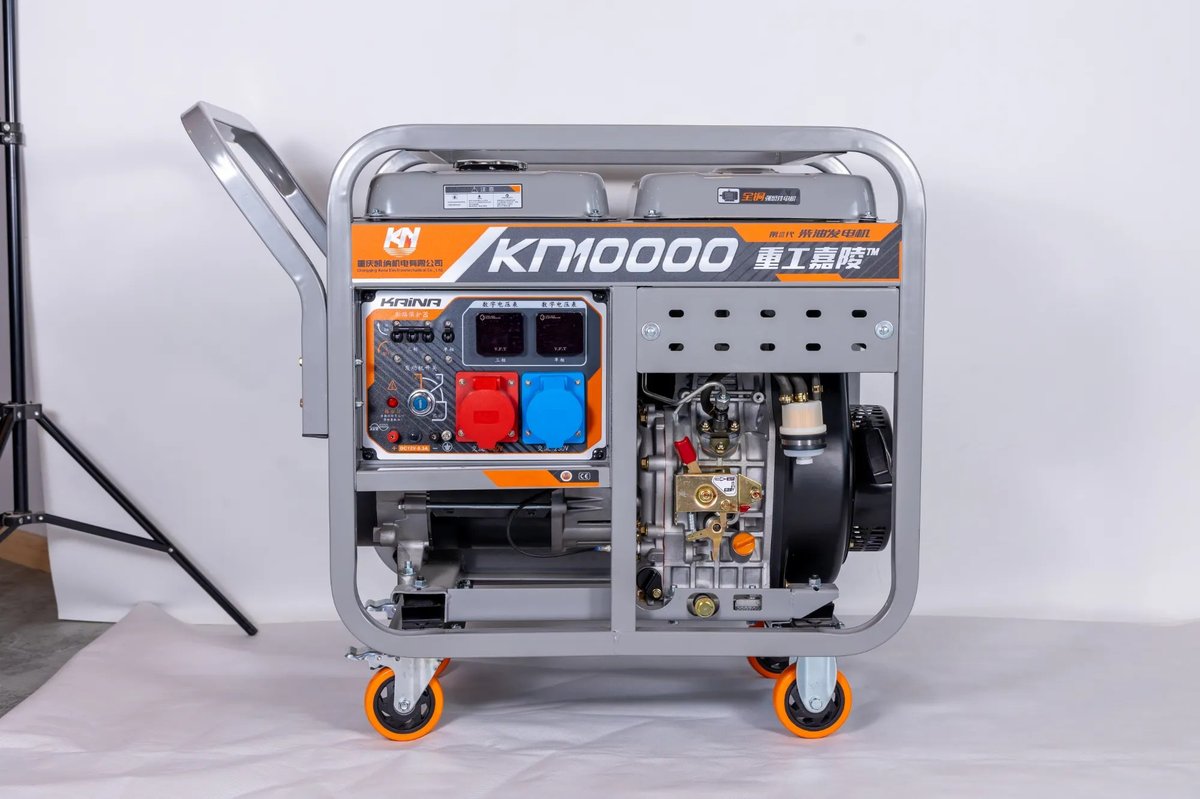
The hum of a reliable power source in the quiet dark can be one of the most reassuring sounds you'll ever hear. Whether you're safeguarding your home against unexpected outages, powering a remote construction site, or ensuring a smooth outdoor event, choosing the right portable diesel generator isn't just about buying a piece of equipment—it's about investing in dependable power when it matters most. This guide will walk you through everything you need to know to make an informed decision, ensuring you select a generator that truly meets your needs, from wattage to longevity.
At a Glance: What You'll Learn About Portable Diesel Generators
- Why Diesel? Discover the unique advantages of diesel over gasoline, including superior fuel efficiency and durability.
- Power Needs: How to accurately calculate your wattage requirements for different applications.
- Key Features Decoded: What to look for in terms of engine quality, fuel tank size, noise levels, and portability.
- Safety First: Essential precautions for operating and maintaining your generator safely.
- Top Picks Analyzed: A look at specific models and their ideal use cases.
- Making the Right Choice: A clear buying guide to help you weigh your options.
The Power Behind the Promise: Understanding Portable Diesel Generators
Imagine a compact powerhouse, ready to spring to life at a moment's notice, converting a steady flow of diesel fuel into essential electricity. That's the essence of a portable diesel generator. Unlike their stationary counterparts, these units are designed for mobility, making them perfect companions for temporary power needs. Think bustling construction sites far from grid access, serene outdoor events needing a reliable energy boost, or emergency home backup when the lights go out.
At its core, a portable diesel generator operates through a straightforward yet robust process:
- Engine: The diesel engine burns fuel, generating mechanical energy.
- Alternator: This mechanical energy is then fed to an alternator, which masterfully converts it into usable electrical energy.
- Support Systems: A sophisticated fuel system ensures a steady supply, a cooling system prevents overheating, and a control panel provides user-friendly operation and monitoring.
These units have earned their reputation not just for their mobility but for fundamental design advantages. They're generally recognized for being more fuel-efficient and often quieter than their gasoline-powered siblings, a significant factor that often tips the scales in their favor for long-term use.
Why Go Diesel? Unpacking the Core Advantages
When the stakes are high, and reliable power is non-negotiable, portable diesel generators often emerge as the champions. They bring a suite of benefits that address critical concerns for both professional and home users.
- Unmatched Fuel Efficiency: Diesel generators are legendary for their ability to wring more power out of every gallon. This translates directly into longer run times on a single tank, making them ideal for extended outages or continuous job site operation. Over time, this efficiency can lead to significant operational savings, potentially cutting fuel costs by up to 30% compared to gasoline over five years.
- Built to Last (and Last): These machines are engineered for the long haul. With heavy-duty engine construction, diesel generators boast superior durability and a longer lifespan. Their robust nature means they stand up better to demanding conditions, offering a reliable workhorse year after year.
- Serious Power Output: When you need to run multiple high-draw appliances or heavy-duty tools, diesel steps up. They're capable of delivering higher power output, making them suitable for industrial applications, large home backup needs, and commercial settings where gasoline units might fall short.
- Long-Term Cost-Effectiveness: While the initial price tag for a diesel generator might be higher, don't let that deter you. Their exceptional fuel efficiency, lower maintenance needs (due to fewer moving parts and slower engine speeds), and extended lifespan translate into substantial cost savings over the generator's lifetime.
- Low Maintenance Requirements: Diesel engines, particularly modern ones, are known for their relative simplicity and endurance. This means less frequent servicing and fewer common issues, simplifying your operational schedule. For more insights on keeping your generator in top shape, check out our guide on essential generator maintenance tips.
- Versatility in Application: From powering critical medical equipment during an emergency to keeping a remote cabin comfortable, diesel generators adapt to a wide array of settings. Their dependable nature makes them a go-to for diverse power needs.
- Reduced Environmental Footprint: Modern diesel engines, especially those meeting current emissions standards, often produce fewer greenhouse gases than their gasoline counterparts. This translates to a lower environmental impact, a growing consideration for many users.
- Enhanced Safety: Diesel fuel itself is less volatile than gasoline, meaning it has a lower risk of fire or explosion. This inherent safety feature adds a layer of peace of mind, particularly in environments where fuel handling is a regular occurrence.
Diesel vs. Gasoline: A Head-to-Head Showdown
When considering a portable generator, the choice between diesel and gasoline is often the first and most critical decision. Each fuel type brings its own set of characteristics to the table, impacting everything from performance to long-term costs. Let's break down the key differences to help you decide which path is right for you. For a deeper dive into this comparison, you might find our article on diesel vs. gasoline generators insightful.
| Feature | Portable Diesel Generators | Portable Gasoline Generators |
|---|---|---|
| Fuel Efficiency | Higher efficiency, significantly longer runtime | Lower efficiency, shorter runtime |
| Power Output | Higher output, ideal for heavy-duty tasks & large loads | Lower output, suitable for lighter applications & fewer devices |
| Maintenance | Generally lower overall, but fuel quality is crucial; fewer parts mean less wear | Easier and cheaper for routine maintenance |
| Noise Level | Typically noisier (though modern units are quieter) | Generally quieter (especially inverter models) |
| Initial Cost | Higher purchase price | Lower purchase price |
| Operational Cost | Lower fuel costs over time, leading to long-term savings | Higher fuel costs over time |
| Durability/Lifespan | More durable, built for longevity and heavy use | Less durable, may require more frequent replacement |
| Safety (Fuel) | Safer due to lower flammability and explosion risk | Higher risk of fire and explosion due to fuel volatility |
| Weight/Portability | Generally heavier and bulkier, though many have wheels | Lighter and more portable |
| Environmental Impact | Typically produces fewer emissions (with modern engines) | Higher emissions |
What to Look For: Key Features of Best Portable Diesel Generators
The market is flooded with options, so understanding the core features that define a top-tier portable diesel generator is essential. These aren't just specs on a page; they're indicators of performance, reliability, and value.
1. Power Output: Matching Watts to Your World
This is arguably the most critical factor. Power output, measured in watts (W) or kilowatts (kW), dictates exactly how many devices your generator can run simultaneously. You'll encounter two key terms:
- Running Watts: The continuous power a generator can supply.
- Starting (or Peak/Surge) Watts: The extra burst of power needed to start motor-driven appliances (like refrigerators, well pumps, or power tools). This surge typically lasts for only a few seconds.
Example: A 5,000W generator might power multiple home appliances (fridge, lights, TV, furnace fan), whereas a 2,000W unit is better suited for one or two smaller items. You'll need to list all the appliances you intend to power, find their running and starting wattages, and select a generator that comfortably exceeds your total running wattage and can handle the highest single starting wattage. For a more detailed guide on calculating your power needs, see understanding generator wattage requirements.
2. Fuel Efficiency & Run Time
These two go hand-in-hand. A generator's fuel efficiency directly impacts its run time—how long it can operate on a full tank. Most manufacturers rate run time at 50% load, which is a good baseline. Higher efficiency means less frequent refueling and lower operational costs. Look for models that promise 10+ hours at half load, as this indicates excellent fuel economy and convenience.
3. Portability: Moving Power Where You Need It
"Portable" can mean different things. While diesel generators are generally heavier than gasoline models, modern designs often incorporate features that significantly enhance mobility:
- Weight: Lighter units are easier to lift and maneuver.
- Handles: Sturdy, ergonomic handles are a must.
- Wheels: Large, robust, never-flat wheels are crucial for navigating uneven terrain on job sites or moving around your property. An integrated lifting eye can also be incredibly useful for commercial applications.
4. Noise Level: The Sound of Silence (or Close to It)
Generators, by nature, produce noise. However, advancements have made significant strides in reducing decibel levels. Noise level, measured in decibels (dB), is a key comfort factor.
- General Guideline: Below 60 decibels is considered quiet for a generator, akin to a normal conversation.
- Impact: A quieter generator is more pleasant for home backup, camping, or job sites where noise regulations are a concern. Diesel generators traditionally have been noisier, but many modern units employ advanced sound-dampening technology.
5. Start Type: Convenience at Your Fingertips
How you start your generator can greatly impact your user experience.
- Recoil Start: The traditional pull-cord method, reliable but can be physically demanding.
- Electric Start: A simple push-button or key ignition, typically powered by a small onboard battery. This is a game-changer for ease of use.
- Remote Start: The ultimate convenience, allowing you to start the generator from a distance using a key fob. This is especially useful in inclement weather or if the generator is placed further away from your main living area.
6. Durability & Build Quality
A diesel generator is an investment, so you want it to last.
- Engine Type: Look for industrial-grade engines from reputable manufacturers (e.g., Yanmar, Kubota).
- Frame: A rugged steel frame (1-1/4 inch is a good benchmark) protects internal components.
- Materials: High-quality components, like cast-iron cylinder sleeves, indicate a generator built for endurance.
7. Safety Features: Non-Negotiable Protection
Safety should never be an afterthought. Essential features include:
- Automatic Shut-off: Shuts down the engine if oil levels are too low, preventing costly damage.
- Overload Protection: Prevents damage to the generator and connected appliances by tripping a circuit breaker if too much power is drawn.
- CO Sensor (Carbon Monoxide): Automatically shuts down the generator if harmful levels of carbon monoxide are detected, a critical life-saving feature.
8. Output Options & Transfer Switch Readiness
Consider the types of outlets provided (120V, 240V, GFCI-protected) and whether the generator is "transfer switch ready" for seamless integration into your home's electrical system, providing whole-house backup.
9. Warranty Coverage
A solid warranty reflects the manufacturer's confidence in their product. Look for at least a 2-3 year warranty on parts and labor.
The True Cost: Balancing Initial Price with Long-Term Value
It's a common misconception that the cheapest generator is the most cost-effective. With portable diesel generators, the upfront cost is often higher than gasoline models. However, this initial investment is quickly offset by substantial long-term savings.
Think beyond the sticker price:
- Fuel Savings: As discussed, diesel's superior efficiency means less fuel purchased over the generator's life.
- Longevity: Diesel engines are built to last, often outliving gasoline counterparts by a significant margin, reducing replacement costs.
- Maintenance: While specific maintenance tasks might differ, the overall robust design of diesel engines often translates to fewer breakdowns and less frequent major repairs. Hour meters are a great feature to help you track maintenance schedules.
When performance includes efficiency, reliability, and longevity, high-performance models truly become cost-effective, potentially saving you thousands in fuel and replacement costs over five to ten years.
Safety First: Operating Your Portable Diesel Generator Responsibly
A generator is a powerful tool, and like any powerful tool, it demands respect and adherence to safety protocols. Neglecting safety can lead to serious hazards, including carbon monoxide poisoning, fire, and electric shock. For detailed guidelines on safe operation, refer to our comprehensive article on safe generator operation.
Here are the non-negotiable rules for safe operation:
- Operate Outdoors ONLY: This is paramount. Generators produce carbon monoxide (CO), an odorless, colorless, and deadly gas. Always run your generator in a well-ventilated area, at least 15-20 feet away from your home, doors, windows, and vents. Never operate it in a garage, basement, or enclosed space.
- Keep it Dry: Protect your generator from rain, snow, and excessive moisture. Moisture can cause electric shock or damage the unit. Consider a canopy or open-sided shelter.
- Refuel Safely: Never refuel a hot or running generator. Turn it off, allow it to cool completely, and then refuel. Spilled fuel on a hot engine can ignite instantly.
- Use Proper Extension Cords: Always use heavy-duty, outdoor-rated extension cords that are rated for the generator's output. Check the wattage rating on the cord to ensure it can handle the load. Avoid overloading circuits.
- Level Surface: Place the generator on a stable, level surface. This prevents tipping and ensures proper lubrication and cooling.
- Store Fuel Properly: Store diesel fuel in approved, clearly labeled containers, away from the generator, heat sources, and living areas.
- Read the Manual: Seriously, read the manufacturer's instructions! Every generator has specific operating procedures and safety warnings.
- Secure Electrical Connections: Ensure all electrical connections are tight, dry, and correctly made.
- Keep a Fire Extinguisher Nearby: In the unlikely event of a fire, having an appropriate extinguisher (Class B or ABC) readily accessible is crucial.
Featured Portable Generator Spotlight: Decoding Your Options
To give you a clearer picture, let's look at some popular portable generators on the market. While our focus is diesel, it's worth noting some multi-fuel options that provide versatility. Remember, always match the generator's specs to your specific needs. You can always explore more portable diesel generators to find the perfect fit.
For Dependable Diesel Power:
- Generac XD5000E 5000-Watt Diesel Portable Generator: This unit is a prime example of a robust diesel workhorse.
- What Makes it Stand Out: Powered by an industrial-grade Yanmar LW Series 435cc engine, it's built for demanding conditions. With a substantial 12-gallon tank, it boasts over 32 hours of runtime at 50% load—exceptional fuel economy. Its 6% harmonic distortion makes it safe for sensitive electronics, a crucial factor often overlooked. The rugged 1-1/4-inch steel frame, integrated lifting eye, handle, and wheels underscore its commercial-grade durability and portability (despite its heft).
- Best For: Construction sites, extended home backup where fuel efficiency is paramount, and users needing reliable power for sensitive equipment.
- Futchoy 196CC 4-Stroke Portable Diesel Generator: A more compact, efficiency-focused diesel option.
- What Makes it Stand Out: Engineered for fuel efficiency through advanced cooling and optimized fuel/exhaust systems. Its lightweight, strengthened alloy box ensures fast heat dissipation and contributes to longevity. Designed for reduced maintenance, it offers a reliable, no-frills diesel power source.
- Best For: Smaller off-grid needs, light emergency backup, RVs, or scenarios where modest power is required with maximum fuel economy and minimal fuss.
For Fuel Flexibility (Dual/Tri-Fuel Options):
While these aren't pure diesel, they represent a significant segment of the portable generator market that offers fuel versatility, a good alternative if diesel isn't always readily available or if you prefer options.
- Westinghouse 12500 Watt Dual Fuel Portable Generator: A powerful contender offering choice.
- What Makes it Stand Out: Delivers impressive wattage on both gasoline (9,500 running/12,500 peak) and propane (8,500 running/11,200 peak). Its 457cc 4-stroke engine and 6.6-gallon tank provide up to 12 hours of runtime. Features like remote electric start (with key fob), automatic low oil shutdown, and multiple covered outlets (including GFCI and transfer switch ready) make it a strong option for home backup.
- Best For: Homeowners needing significant backup power with the flexibility to switch between gasoline and propane, especially if one fuel type is more accessible or cheaper at a given time.
- Westinghouse 14500 Peak Watt Tri-Fuel Generator: The ultimate in fuel versatility.
- What Makes it Stand Out: Operates on gasoline, propane, and natural gas, providing unparalleled flexibility (11,500 running/14,500 peak on gas). An extended 19-hour runtime on its 9.5-gallon gasoline tank is notable, and it's transfer switch ready for whole-house backup.
- Best For: Those who want maximum adaptability in fuel sources for very long outages, or if natural gas hookup is an option for permanent home backup.
- DuroStar DS13000MX Dual Fuel Generator: Designed with safety in mind.
- What Makes it Stand Out: Offers a robust 13,000 watts peak output on either gasoline or propane. A standout feature is its CO Alert system, which automatically shuts down the generator if high carbon monoxide levels are detected. Its heavy-duty construction and easy fuel-switching technology add to its appeal.
- Best For: Homeowners prioritizing safety, job site managers needing adaptable power, or RV users who value fuel flexibility and robust build.
- WEN DF1100T Dual Fuel Generator: A practical and portable dual-fuel option.
- What Makes it Stand Out: Provides 11,000 surge/8,300 running watts on gasoline and 9,500 surge/7,500 running watts on propane, with quick fuel switching. It boasts an electric start, a powerful 457cc OHV engine, and adjustable voltage output (120V/240V). The integrated wheel kit enhances portability, and it supports transfer switch connections for home backup.
- Best For: Those needing a versatile and powerful dual-fuel generator for home backup, job sites, or recreational use, with an emphasis on ease of use and portability.
Your Action Plan: Choosing the Right Portable Diesel Generator
Making the final decision requires a systematic approach. Don't rush into a purchase; evaluate your needs carefully against the generator's capabilities.
- Assess Your Power Needs (Precisely!):
- List Everything: Make a comprehensive list of all appliances, tools, and lights you intend to power.
- Calculate Watts: Determine the running watts and starting watts for each item. Remember, starting watts can be significantly higher for motor-driven items.
- Sum It Up: Add up all the running watts to get your total continuous power requirement. Then, identify the item with the highest starting wattage and add that to your total running watts (assuming other items are already running at their running wattage). This gives you your absolute peak wattage requirement.
- Buffer Up: Always select a generator whose running wattage exceeds your total continuous needs by at least 10-20% and whose starting wattage can handle your highest single surge.
- Determine Your Fuel Type Priority:
- Genuine Diesel: If maximum fuel efficiency, durability, and long-term cost savings are paramount, and you have reliable access to diesel fuel, a dedicated diesel generator is your best bet.
- Dual/Tri-Fuel: If fuel availability is a concern, or if you appreciate the flexibility of using gasoline, propane, or even natural gas (for tri-fuel), these options offer significant adaptability, though they won't offer the same long-term durability or fuel efficiency as pure diesel.
- Prioritize Portability:
- Frequent Movement: If you'll be moving the generator often (e.g., job sites, camping trips), look for units with sturdy wheels, ergonomic handles, and a manageable weight. An integrated lifting eye is a huge plus for commercial use.
- Stationary Backup: If it's primarily for home backup and will mostly stay in one place, raw weight might be less of a concern, but ease of occasional movement is still beneficial.
- Insist on Essential Safety Features:
- Automatic Low Oil Shutdown: Prevents engine damage.
- Overload Protection: Protects both generator and appliances.
- CO Sensor/Shutoff: A non-negotiable life-saving feature, especially if there's any chance of it being used near occupied spaces (even with proper outdoor placement).
- Evaluate Runtime and Fuel Efficiency:
- Extended Use: For long outages or continuous work, prioritize units with larger fuel tanks and excellent fuel economy (e.g., 10+ hours at 50% load).
- Short Bursts: If it's for very occasional, short-term backup, this might be less critical.
- Check Output Options and Transfer Switch Readiness:
- Voltage Needs: Ensure it provides the correct voltage and amperage for your devices (120V, 240V, GFCI outlets).
- Home Backup: If planning to connect to your home's electrical system, ensure it's "transfer switch ready" for safe and legal integration by a qualified electrician.
- Consider Durability and Maintenance Indicators:
- Build Quality: Look for heavy-duty frames, industrial-grade engines, and quality materials (e.g., cast iron sleeves).
- Maintenance Aids: Features like an hour meter help you track usage and adhere to maintenance schedules, prolonging the generator's life.
By meticulously working through these steps, you'll not only choose a portable diesel generator that powers your life effectively but also one that provides peace of mind for years to come. Your investment in reliable power will pay dividends whenever the unexpected happens.